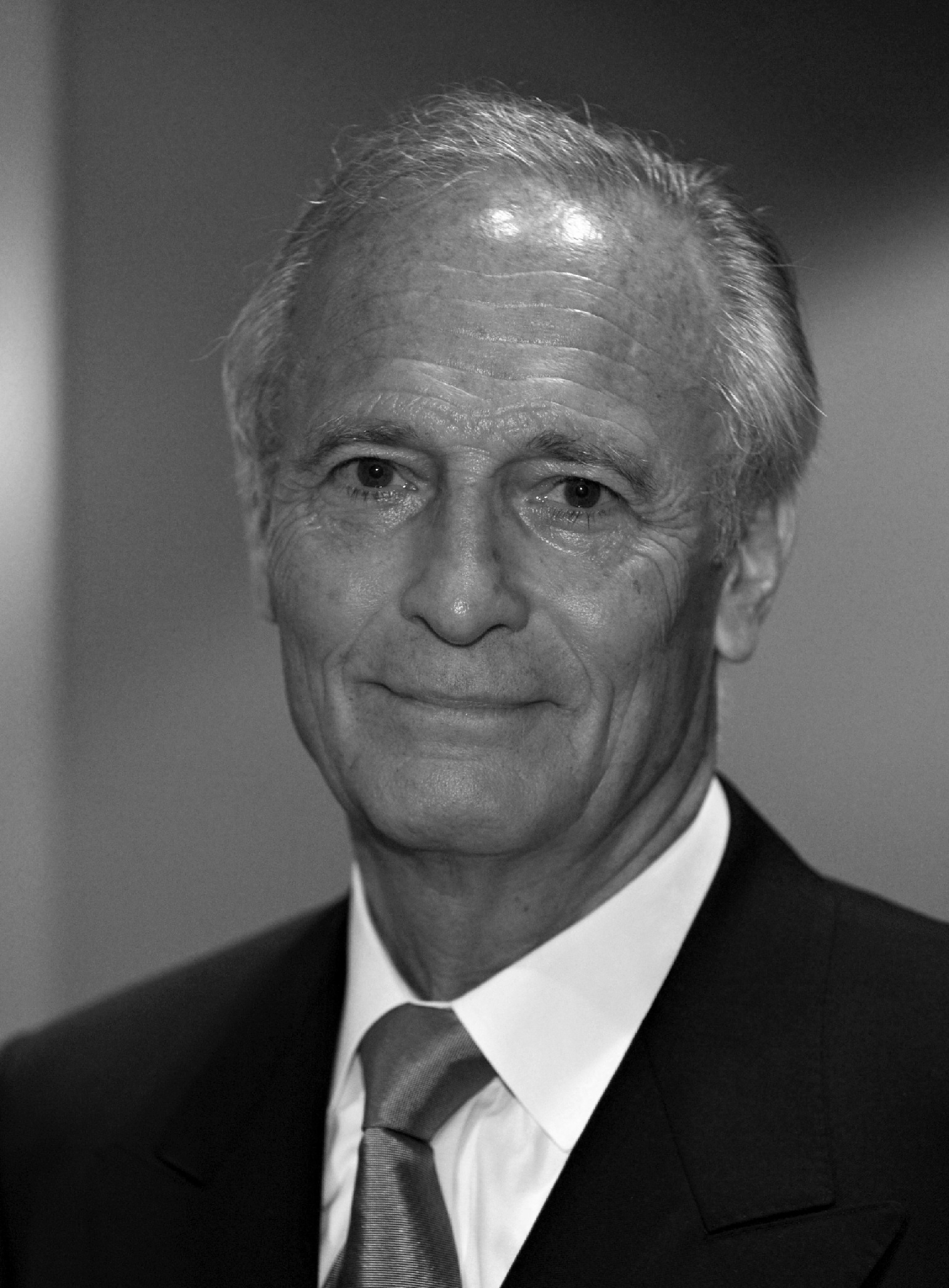
LEADER
Giroud’s passion for engineering was compounded with the passion for ideas and procedures in Giroud the leader. Leaders see clearly what needs to be done. To this end, they accept, seek or create positions that enable accomplishing it. Appreciating the work that needed to be done in the area of geosynthetics, Giroud helped in the creation of suitable organizational infrastructure for each facet of work: a society (International Geosynthetics Society – IGS), journals (Geotextiles and Geomembranes, Geosynthetics International), a consulting firm (Geosyntec). His active involvement lasted from several years to decades: IGS, initiator (1982-1983) and first elected President (1986-1990); Geotextiles and Geomembranes, co-founder with Terry Ingold in 1984 and Chair of the Editorial Board (1984-1994); Geosynthetics International, co-founder with Terry Ingold in 1994 and Chair of the Editorial Board (1994-2022), Geosyntec, co-founder with Joe Fluet in 1983, Senior Principal/Chair of the Board (1983-2001).
Giroud’s writings and lectures suggest that he has been driven by two goals: to familiarize geotechnical engineers with geosynthetics [1, 2] and to establish a geosynthetics community [3, 4]. From 1983 to 1989, Giroud served two terms as chair of TC9, the Technical Committee on Geotextiles of the International Society for Soil Mechanics and Foundation Engineering (ISSMFE). The committee was created by Victor de Mello, then ISSMFE president, and announced in February 1983 [5]. Under the next ISSMFE president B.B. Broms, the name of TC9 was changed in 1986 to Geotextiles and Geosynthetics [6]. (Fast forward to 2024 when the Int. Society for Soil Mechanics and Geotechnical Engineering, ISSMGE, has two related committees: TC202, Transportation Geotechnics, and TC218, Reinforced Fill Structures.) The auspicious public beginning of TC9 is the report “Geotextiles in Geotechnical Engineering, Practice and Research”, which was presented in a special session of the 11th Int. Conf. on Soil Mechanics and Foundation Engineering (ICSMFE) in San Francisco in 1985. (Forward to 1989, at the 12th ICSMFE in Rio de Janeiro: TC9 organized a discussion session “Reinforced Soil Slopes and Walls” with five papers [7].) The 11th ICSMFE report was published also in 1985 as a 64-page paper in a special issue of Geotextiles and Geomembranes with a foreword by Victor de Mello [1]. A key feature of the report is six pages with neat schematics that support the discussion of nine functions of geotextiles: drain, filter, screen, erosion control mat, separator, container, tensioned membrane, reinforcement, cushion. The schematics also facilitate understanding of the relationship of functions to properties (thickness, compressibility, permeability, opening size, puncture-tear resistance, tensile characteristics, interface shear strength) and applications of geotextiles in transportation engineering, water resources engineering, environmental engineering and coastal engineering. The report puts forth a six-step rational design philosophy and tabulates available methods of design. It is a highly readable report that can now serve as a time capsule for the state of art on geotextiles in mid 1980s. Another key output of TC9 is a compilation of geosynthetics case studies published as a book in 1993 [6]. The project was initiated by Giroud and the book was co-edited by Gerry Raymond and JP Giroud. Giroud defined the format, standardized the case titles [title starts with a “geoword” that identifies the geosynthetic(s) used and ends with the name of the location where the project is sited], reviewed the cases, wrote the introduction of the book and designed its cover. This case study compilation has three notable features worth emulating: each case study has a succinct introduction, a standard two-page length, and the same type of information (if possible presented in the same order, for example: description, design, geotextile selection, construction, performance, conclusions, references). In addition, many figures were redrawn for readability, thus further enhancing the consistency of the presentation. This case study book is another heritage piece with some early geosynthetics cases, such as a case where sandbags were used to construct a temporary breakwater dam in the Netherlands in 1957, believed to be the first time a synthetic fabric was used in a civil engineering project [8].
In parallel with his efforts to familiarize geotechnical engineers with geosynthetics, Giroud campaigned extensively and successfully to consolidate international interest manifested between two key conferences in 1977 and 1982 into a separate learned society, the International Geotextile Society (IGS). On April 20-22, 1977, an International Conference on the Use of Fabrics in Geotechnics (Colloque International sur l’ Emploi des Textiles en Géotechnique) was co-organized in Paris by Ecole Nationale des Ponts et Chaussées and Laboratoire Central des Ponts et Chaussées. On August 1-6, 1982, the Second International Conference on Geotextiles took place in Las Vegas; it was sponsored by the Industrial Fabrics Association International (IFAI) and chaired by JP Giroud. Giroud tells the story of IGS formation in a 2006 paper presented at the 8th Int. Conf. on Geosynthetics in Yokohama, Japan [4]. In summary, the organization of the 1982 conference prompted discussions on the formation of an international society. The American Society for Testing and Materials (ASTM), a cooperating sponsor of the 1982 conference, had appointed in 1980 an organizing committee for the conference chaired by JP Giroud. In the meeting of that committee on June 23, 1980, it was decided that the name of the 1982 conference would be 2nd Int. Conf. on Geotextiles, which implied that the 1977 Paris conference was the 1st, and that the 3rd conference would take place in 1986 or 1987. Also implied was that an International Society for Geotextiles should be created. Giroud presented the concept of the new society in a meeting during a symposium organized by Charles Schaerer in Zurich in March 1982. All 25 participants from seven countries were in agreement. Giroud relayed the support of the European professionals to the North American professionals in a meeting of the ASTM in Toronto in June 1982. The participants of the Zurich and Toronto meetings, as well as many others, participated in the meeting for the formation of IGS at the 1982 Las Vegas conference, where the majority of the approximately 150 participants from 34 countries voted for the formation of the IGS. It was also decided that the next conference would be organized in four years. During 1982-1983 an interim committee under the chairmanship of Charles Schaerer set things in motion.
The International Geotextile Society was founded in November 1983 in Paris, in a meeting organized by the French Committee on Geotextiles, one of the two largest groups (with Japan) at the time. Giroud ascribes the success of the IGS to its formation from the roots and the visionary bylaws written by Guy Massenaux, which associate closely corporate and individual members. Soon after the IGS formation, it became apparent that geomembranes belong in the same family with geotextiles. It was fortunate that Giroud acted as link between the geotextiles community and the geomembranes community, through his role as the chair of the 1984 International Conference on Geomembranes; the IGS council extended an invitation to geomembrane specialists, which was accepted. As a result, the 3rd Int. Conf. in Vienna in 1986 included papers on geomembranes and related products. At the same conference, Giroud became IGS’s first president elected by the General Assembly. A suitable point to pause this story is the change of the name of IGS to International Geosynthetics Society in 1992. [NOTE In 2025, the IGS created a legacy site honoring JP Giroud.]
The IGS has two thriving official journals, Geotextiles and Geomembranes and Geosynthetics International. Geotextiles and Geomembranes was founded in 1984 by JP Giroud and Terry Ingold, who served as Chair of the Editorial Board and Editor, respectively, for the next ten years (1984-1994). They resigned together from Geotextiles and Geomembranes when its publisher refused to lower the subscription price. They then founded Geosynthetics International and, as soon as the first issue of Geosynthetics International was published, the subscription price of Geotextiles and Geomembranes was drastically lowered to be the same as the subscription price of Geosynthetics International. Ingold was Editor of Geosynthetics International for twelve years (1994-2006) [9] and Giroud Chair of the Editorial Board for nearly thirty years (1994-2022) [10]. Richard Bathurst has been the third driving force for Geosynthetics International, serving as Co-Editor (1996-2006), Editor (2007-2022) and Editor-in-Chief since 2023 [11].
Finally, Geosyntec, which started in 1983 with the name Geoservices. It grew to 30 people in four years and to 180 people in ten years. From providing expertise in geosynthetics in the role of subcontractor to major consulting firms, it quickly became a full-fledged consulting company with an initial specialty in landfills. Giroud credits co-founder Joe Fluet for providing the business experience he lacked and recognizes Rudy Bonaparte as the natural leader for the management and growth of the company after Fluet’s departure in 1993. Before Giroud retired from Geosyntec in 2001 to become an independent consultant, Geosyntec had expanded its services to include environmental remediation, water resources protection and environmental management. In 2025 Geosyntec has more than 2600 people and more than 130 offices worldwide, remains an employee-owned company and credits its founder for its dedication to innovation.
Are these systematic remarkable outcomes the result of fortuitous constellation of talent or are there also even micro-lessons to extract? Giroud has been known to joke that all he has created has become more successful after he left and he is proud of that because his mission as a trained geotechnical engineer is to lay good foundations.
In the words of Giroud's peers
To add to the picture of Giroud as leader, we asked his peers whether they could share nuggets of leadership wisdom by having observed him in action. Here’s what they wrote.
Richard Bathurst
I have had the pleasure of knowing JP Giroud since I first met him at the Vienna conference in 1986 when I was a freshly minted PhD. His formidable presence and technical breadth of knowledge were, frankly, very intimidating to the youngster that I was at that time. Later he appointed me as Editor of the IGS Newsletter, which brought me into close contact with JP for each of the three annual issues of the “News”. He meticulously checked each sentence in each issue! His precision of thought and command of the English language was extraordinary and a benchmark that I have aspired to since. Later, I became Co-editor, Editor and then Editor-in-Chief of the journal Geosynthetics International that was originally founded by JP Giroud and Terry Ingold. JP prepared the formatting rules and geosynthetics terminology to be used in the journal articles and which persist to this day. He then continued as the Chairman of the Editorial Board where he provided wisdom and guidance until stepping down in 2022 after 27 years of dedicated service. I am very grateful for the technical lessons learned from him, his mentorship, but best of all, knowing that he counts me as a friend. Thank you JP for teaching us that no detail is too small for a leader who leads by example.
Jorge G. Zornberg
Many of us have benefited from three unique outcomes from Dr. JP Giroud’s leadership: the technical journals he created (Geosynthetics International, Geotextiles and Geomembranes), the consulting firm he founded (Geosyntec Consultants), and the technical society he initiated (International Geosynthetics Society). By acting in the geosynthetics discipline, I am someone who has been, indirectly yet regularly, exposed to the unique outcomes of JP’s leadership. However, beyond this indirect exposure to Dr. Giroud’s creations, I have the privilege of having also benefited from the direct exposure to Dr. Giroud, either directly with him, or directly with the journals, consulting firm, and society he created.
I have already mentioned to Dr. JP Giroud that I am convinced that one of his ancestors is René Descartes. His “Rules for the Direction of the Mind” appear to have been transferred directly to Dr. Giroud’s DNA. For example, Descartes’ rule of “Accept nothing as true” has consistently guided (consciously or perhaps innately) each of Dr. Giroud’s outcomes. Are we following a given approach because everyone is doing it? That’s probably against Dr. Giroud’s religion. Equally Cartesian are Dr. Giroud’s meticulous approach to “Divide into simple parts”, then “Move from simple to complex” and, finally, methodically “Test the reasons” to assess whether our hypotheses are based on sound reasoning or fallacy. I cannot find a better way to describe Dr. Giroud’s methods in leading his journals, consulting firm, and society than those coined by Descartes himself. With this framework in mind, I’ll next illustrate Dr. Giroud’s leadership through my direct exposure to him and his unique creations.
I’ll start with my experience with the journals Dr. Giroud created. I could spend many hours describing the unique ordeal of working on manuscripts, particularly journal papers, in collaboration with Dr. Giroud. Knowing what a prolific writer Dr. Giroud is, it is hard to believe the devotion and attention to detail he has given to each of his manuscripts. And he indeed spreads such devotion to his coauthors, who struggle to match his logical selection of every term in a paper, the rigor in the text’s logic and consistency, and the value of proper peer review. However, the experience I’d like to share is about working with Dr. Giroud as the leader (Chief Editor) of a technical journal. This experience dates back to my very first contact with Dr. Giroud in 1993, while I was still a graduate student at UC Berkeley. At the time, I was discussing with my research advisor (Prof. James K. Mitchell) the potential merits of embarking on writing my first journal paper. My advisor recommended that I call the journal’s editor (Dr. Giroud) to inquire about the value and appropriate scope of our potential contribution. “He’ll give you an honest opinion … here is his phone number”, Prof. Mitchell said. So, this graduate student made a cold phone call, with broken English, to a giant in our profession. Dr. Giroud's leadership as journal editor was such that, to my surprise, he not only picked up the phone call but also thoroughly discussed the possible structure of the contribution. The publication became ultimately scoped as two companion papers in Geosynthetics International, my first set of journal papers.
I also had the privilege of working as a project engineer at Geosyntec Consultants, the consulting firm Dr. Giroud founded. Despite working in offices in opposite corners of the US (Florida and California), the opportunities to work together proved to be well within reach, thanks to the continued availability of Dr. Giroud to mentor young engineers in the company. A good example is a challenging project we embarked on, which focused on designing the exposed geomembrane cover for what would have been the first hazardous waste site with such a type of closure system. The unique nature of the site (e.g., steep, long slopes) required refinement of the design methods available at that time (which had been developed initially by Dr. Giroud). As part of this effort, design methods for exposed geomembrane covers were expanded to address unique site conditions of the site, resulting in an exposed double geomembrane cover (due to the hazardous nature of the waste) that satisfied the technical requirements (stability, erosion, durability, maintenance, cost) better than any other alternative. Never mind that the exposed geomembrane cover was ultimately not adopted (due to lack of community acceptance… the neighborhood was not ready for what I considered a visually appealing exposed geomembrane cover). Yet, Dr. Giroud’s leadership in exploring new technical alternatives, even if design methods were not readily available, led to future uses of one of the most recent innovations in closure systems for waste containment.
Finally, I also benefited from Dr. Giroud’s leadership as founder in the 1980s of a new international society, the IGS. I am honored to have served as IGS president some 25 years after Dr. Giroud’s pioneering effort as IGS founder and president. My tenure as IGS president went from 2010 to 2014, a period of significant growth and changes, during which the number of countries with IGS chapters essentially doubled, and also a period that witnessed radical changes in the way communications took place among leaders of the IGS and with the IGS membership at large. Yet, as conceived by Dr. Giroud during its foundation, the principles and vision of the society were not an obstacle to the way of crucial changes but, in fact, proved to enable and catalyze many of them. A notable example is the unique characteristic of the IGS as a society of individual members (despite its international nature), rather than a global society grouping national chapters (or societies). This allowed the growth in the number of national chapters without compromising the structure of society’s governance. Actually, it became apparent that Dr. Giroud’s leadership and vision were for an international learned society structured not to merely address the hot-button issues at the time of its creation, but to facilitate addressing changes, unforeseen at the time, in a way that would ultimately drive continued growth and innovation.
Dr. Giroud’s leadership has made a profound impact on my personal and professional self, it permeates the many facets of the geosynthetics discipline, and it will continue to foster its growth and innovation.
References
[1] Giroud, J.P., Arman, A., & Bell, J.R., 1985, “Geotextiles in Geotechnical Engineering, Practice and Research”, Report of the ISSMFE Technical Committee on Geotextiles, Geotextiles and Geomembranes, Vol. 2, No. 3, pp. 179-242. [link]
[2] Giroud, J.P., 2024, “The Geosynthetics Discipline and its Interaction with Geotechnical Engineering”, Fabricated Geomembrane Institute (FGI) Webinar, March 2024. [FGI link] [ YouTube link]
[3] Giroud, J.P., 1986, “From Geotextiles to Geosynthetics: A Revolution in Geotechnical Engineering”, Proceedings of the Third International Conference on Geotextiles, Vol. 1, Vienna, Austria, April 1986, pp. 1-18. [link]
[4] Giroud, J.P., 2006, “A short history of the origins of the IGS”, Proceedings of the 8th International Conference on Geosynthetics, Yokohama, Japan, September 2006, Vol. 1, pp. 3-6. [link]
[5] Ingold, T.S., 1985, “Special Issue Editorial”, Geotextiles and Geomembranes, Vol. 2, No. 3, pp. 177-178. [link]
[6] Raymond, G.P. & Giroud, J.P., Eds., 1993, “Geosynthetics Case Histories”, ISSMFE, BiTech, 277 p. [link]
[7] Giroud, J.P.; Schneider, H.R.; Gourc, J.P. & Beech, J. F.; Delmas, Ph.; Tatsuoka, F., Murata, O. & Tateyama, M.; Fannin, R. J., 1989, “Discussion Session on Reinforced Soil Slope and Walls”, Proc. 12th ICSMFE, Vol. 5, pp. 3003-3013, Rio de Janeiro August 1989 [link]
[8] Vos, J.G., 1993, “Geotextile Mat and Sandbags as Temporary Breakwater Dam, Pluimpot, The Netherlands”, In [6]: Geosynthetics Case Histories, Raymond, G.P. & Giroud, J.P., Eds., ISSMFE, BiTech, pp. 76-77. [link]
[9] Giroud, J.P., 2007, “Terry S. Ingold is retiring”, Geosynthetics International, Vol. 14, No. 1, p. 1, https://doi.org/10.1680/gein.2007.14.1.1
[10] Giroud, J.P., 2022, “Last words from the former Chairman of the Editorial Board”, Geosynthetics International, Vol. 29, No. 2, p. 113, https://doi.org/10.1680/jgein.2022.29.2.113
[11] Bathurst, R.J., 2024, “Celebrating 30 years of Geosynthetics International”, Geosynthetics International, Vol. 31, No. 6, pp. 806-807, https://doi.org/10.1680/jgein.2024.31.6.806